Choosing the best Industrial Floor Repair Mortar in 2026 is not simply a matter of picking the strongest product. A repair that lasts in a dry warehouse may fail beside a washdown area, a loading dock, or a production line exposed to oils and repeated impacts. The right choice depends on the concrete, the damage, the traffic, and the time available before the floor returns to service. Small details matter. A dusty edge or damp substrate can undermine an otherwise suitable repair.
This guide compares key mortar types and the conditions they are designed to handle. It considers bond strength, curing time, chemical exposure, temperature range, and ease of placement. It also explains why fast curing is not always the best answer: a short shutdown may save time, but only if the crew can prepare and place the material correctly. Check the product data sheet, confirm compatibility with the existing slab, and follow the specified surface preparation and curing instructions. For demanding sites, a sample patch or a qualified contractor’s assessment can reveal problems that a brochure cannot. That step may feel slow. Still, skipping it can make a small repair turn into a recurring maintenance issue. Product performance varies, and no mortar can compensate for poor preparation or a moving substrate. The best option is the one that fits the site’s real conditions, not merely the one with the most impressive headline claim.
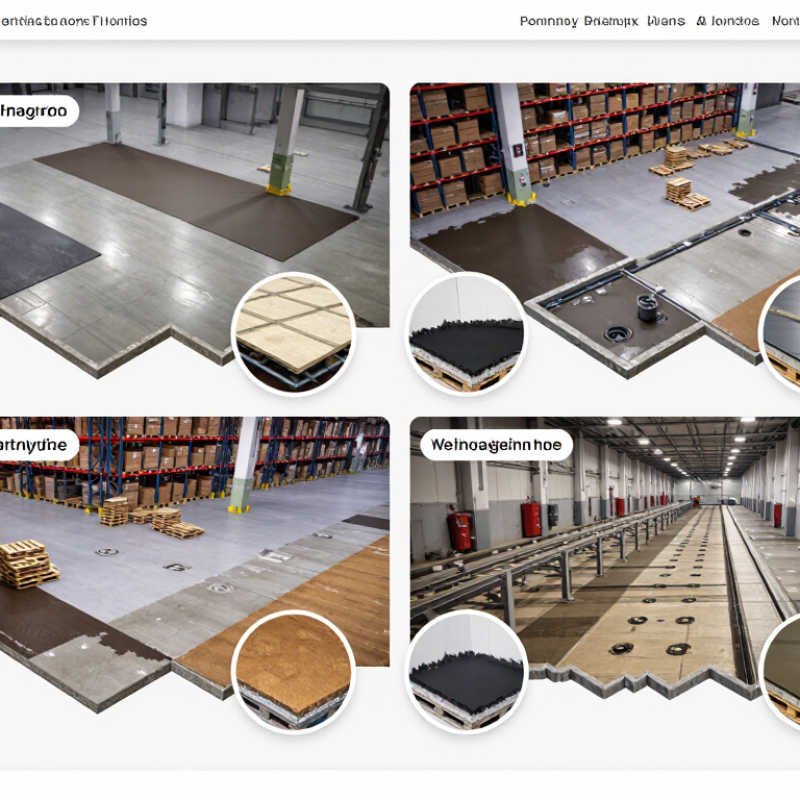
Industrial floor repair mortar is a cementitious or resin-modified material used to restore worn, cracked, or spalled concrete. It bonds to prepared concrete and hardens into a load-bearing patch. The exact chemistry matters: cement-based mortar tolerates damp conditions better, while some resin systems cure faster but need stricter surface preparation. That sounds simple. It isn’t. Oil, dust, weak concrete, or smooth edges can prevent a lasting bond.
Repair begins with removing unsound material and exposing a firm, textured base. The mortar is then mixed, placed, and cured according to its technical data sheet. ASTM C928/C928M evaluates packaged rapid-hardening cementitious repair materials through properties such as compressive strength and length change. ACI 302.1R guidance uses seven days as a common curing benchmark for many concrete floors, but repair mortars can require different schedules. Faster reopening is not automatically better; rushed curing can leave weak edges or shrinkage cracks.
Tips: Check the repair depth, working time, and reopening strength before choosing a mortar. Keep the patch edges square, and remove dust before placement. Record surface temperature and moisture. Those details are easy to overlook, and they can explain why a repair fails even when the mortar seemed suitable.
The best mortar depends on the floor’s loads, exposure, and return-to-service window. Check compressive strength at the required opening time, not only the 28-day value. ASTM C928/C928M evaluates rapid-hardening cementitious repair materials, including compressive strength and length change. That matters when forklifts cross a patch soon after placement. Fast curing alone is not enough.
Bond and surface preparation deserve equal attention. ASTM C1583/C1583M provides a pull-off test for assessing tensile bond strength. ICRI Guideline 310.2R describes ten concrete surface profile levels, CSP 1 through CSP 10. Specify a profile suited to the repair system, then verify it on site. A dusty edge can undermine a strong mix. This detail is easy to miss.
Also compare abrasion resistance, chemical exposure limits, shrinkage, and working time at the actual site temperature. A loading-bay repair may face tire scuffing, standing water, and oil spills. Ask for test results and installation limits, not broad claims. Confirm compatibility with the existing slab and any coating. Real floors are uneven; laboratory results cannot capture every joint, patch edge, or rushed handoff. That uncertainty should shape the specification.
Main Types of Industrial Floor Repair Mortar
Industrial floor repair mortars generally fall into cementitious, polymer-modified, epoxy, and rapid-setting categories. Standard cementitious mortar suits deeper repairs and uneven concrete edges. Polymer-modified mixes bond more strongly and resist abrasion better than ordinary cement mixes. Epoxy mortar handles chemical exposure and heavy loads, but damp concrete can weaken adhesion. Rapid-setting cementitious mortar helps reopen aisles sooner. It may offer less working time, though.
Choose by damage, substrate moisture, chemical exposure, and traffic schedule. The U.S. Bureau of Labor Statistics reported 2.6 million nonfatal workplace injuries and illnesses in private industry in 2023. That figure does not measure floor-related incidents, but it underscores why sound, slip-resistant walking surfaces matter. Product data sheets and ASTM C928/C928M testing can help compare rapid-hardening cementitious repair materials. A strong mortar still fails on poorly prepared concrete.
Tips: Remove loose material and dust, then follow the specified surface-preparation profile. Check moisture before applying resin-based mortar. Patch a small area first. It is easy to underestimate how quickly a busy floor gets wet again. Allow the stated cure time before returning forklifts or pallet trucks.
Main Types of Industrial Floor Repair Mortar
The chart shows the minimum compressive-strength thresholds for EN 1504-3 repair classes R1–R4, not a direct comparison of mortar formulations. Cementitious and polymer-modified cementitious mortars may be classified under this standard. Epoxy and polyurethane-cement systems are other common floor-repair types; compare their product-specific technical data for strength, chemical resistance, cure time, and service conditions.
Industrial floor repairs rarely have one best mortar. The right choice depends on downtime, chemical exposure, impact, and substrate moisture. Rapid-setting cementitious mortars suit shallow spalls and urgent reopening. They are practical near loading bays, where pallet trucks need a firm, level patch quickly. But “fast-setting” does not mean ready for every load; confirm cure time and temperature limits in the technical data.
For higher chemical exposure, epoxy mortar can provide a dense, abrasion-resistant repair. Its rigidity can be a drawback where the slab moves or remains damp. Polyurethane-cement systems tolerate thermal cycling and wet processing areas, though installation and cure conditions still matter. EN 1504-3 sets compressive-strength thresholds of 25 MPa for class R3 and 45 MPa for R4 repair materials. Those figures help compare strength classes, but they do not measure wear life or chemical resistance. Not always.
Preparation often decides whether any system lasts. ICRI 310.2R describes concrete surface profiles used to specify preparation; the required profile depends on the repair material and thickness. A clean, sound edge matters more than a neat-looking feathered patch. I would check moisture, traffic timing, and exposure first, then compare mortar data against those conditions. One detail is easy to miss: a strong repair can still fail at a weak or poorly prepared bond line.
| Repair mortar type | Best suited to | Typical return-to-service profile | Chemical and moisture exposure | Temperature and impact conditions | Key considerations |
|---|---|---|---|---|---|
| Rapid-setting cementitious mortar | Urgent patching of spalls, holes, and localized damage where downtime must be limited. | Often selected for faster reopening than conventional cementitious repair materials. Actual traffic readiness depends on the formulation, repair depth, temperature, and curing conditions. | Generally appropriate for ordinary service exposure; not a substitute for a chemical-resistant lining where aggressive chemicals are present. | Performance depends on the specific formulation and installation conditions. Match the repair material to the floor’s service temperature and loading. | Follow the specified water ratio, mixing time, placement depth, and cure instructions. Fast set can leave a short working time. |
| Polymer-modified cementitious mortar | General-purpose concrete repairs, including patches that benefit from improved adhesion and reduced permeability compared with basic cement mortar. | Usually requires more curing time than products specifically formulated for rapid reopening. Confirm the minimum cure before forklift or heavy-traffic use. | Can tolerate damp service conditions when designed for them, but suitability for immersion or chemical exposure is product-specific. | Useful for many indoor and outdoor concrete repairs; select a system rated for the expected temperature changes and loading. | Concrete preparation is essential. Remove weak material and contaminants, and follow the product requirements for substrate moisture and curing. |
| Epoxy mortar | Heavy-duty, bonded repairs where high strength, abrasion resistance, and resistance to specified chemicals are priorities. | Can reach service strength relatively quickly, but cure and reopening times vary substantially with product chemistry, temperature, and repair geometry. | Often offers strong resistance to selected chemicals after full cure. Resistance is not universal; check compatibility with the actual chemicals, concentration, and exposure duration. | Frequently used in demanding industrial areas. Confirm suitability for thermal cycling, hot washdown, and impact conditions with the system supplier. | Requires accurate component mixing and careful substrate preparation. Moisture limits, primer requirements, and allowable installation temperatures vary by system. |
| Polyurethane-cement (urethane-cement) mortar | Wet-processing and washdown areas exposed to thermal cycling, hot liquids, or demanding combined service conditions. | Available in formulations with different cure schedules. Reopening time depends on the selected product and site temperature. | Often chosen for wet environments and resistance to a range of chemicals; verify performance against the specific exposure and cleaning regime. | Commonly considered where temperature swings and thermal shock are concerns. The rated service-temperature range is formulation-specific. | Check required thickness, substrate condition, and detailing at drains and edges. Installation and cure conditions must follow the product specification. |
Selection note: No single mortar is best for every floor repair. These are general material characteristics, not guaranteed performance ratings; formulations differ. Confirm chemical compatibility, substrate-moisture limits, repair depth, cure time, and service-temperature range in the current technical data sheet, and assess the concrete and exposure conditions before selection.
What Is the Best Industrial Floor Repair Mortar in 2026?
How to Select a Mortar for Substrate, Damage, and Operating Conditions
Start with the slab, not the product label. Is the concrete sound, damp, oil-stained, or already delaminating? Remove weak material and contaminants, then match the repair mortar to the prepared surface. ICRI Guideline 310.2R describes ten concrete surface-profile levels, from CSP 1 to CSP 10. That range matters: a thin feather-edge patch needs a different profile from a deep, heavily trafficked repair. The guideline is useful, but a profile number alone cannot confirm that the substrate is sound.
Next, map the damage and the operating conditions. A shallow spall beside a doorway may suit a fast-setting cementitious mortar; a chemically exposed bund area may need a chemically resistant system. Check repair depth, curing time, temperature, moisture, wheel loads, and exposure to oils or cleaning agents. For areas where forklifts turn sharply, bond strength and abrasion resistance deserve close attention. For wet routes, specify a finish with suitable slip resistance. The U.S. Bureau of Labor Statistics recorded 865 fatal work injuries involving falls, slips, and trips in 2022; the figure does not measure floor failures, but it underscores why surface condition matters.
Ask for test data tied to the actual use, including compressive strength, bond strength, and abrasion resistance. ASTM C928 covers testing and classification of rapid-hardening cementitious repair materials. Compare results with project requirements, not just a headline strength value. A patch can cure quickly and still be the wrong choice. Small trial areas can reveal problems with bonding or finishing before crews repair an entire aisle.