7 Best Trade Show Booth Rental Alternatives for Buyers
A trade show booth rental can simplify planning, especially when a company exhibits only once or twice a year. But a rental is not automatically the easiest or most affordable choice. Shipping, furniture, graphics, installation, storage, and on-site services can change the final price. One quote may include these details; another may not. That matters.
A Trade Show Booth Rental Alternative could be a portable display, a modular booth, a purchase from an exhibit provider, or a hybrid setup that combines owned and rented components. Each option suits different needs. A small team with limited storage may value a lightweight booth that fits in a vehicle. A brand launching a new product may need custom lighting, a screen, or room for demonstrations. There is no single best answer.
This guide compares seven alternatives for buyers, with practical trade-offs in cost, setup, reuse, and flexibility. Look beyond the listed price. Ask who handles freight, repairs, graphic updates, and installation, and confirm what the estimate excludes. A lower-cost option can demand more staff time. A reusable booth can still sit unused between events. That is easy to overlook.
The right choice depends on your event schedule, team capacity, and brand goals. Even careful planning cannot remove every surprise; venue requirements and shipping timelines can shift. Use the comparisons as a starting point, then verify details with providers before committing.
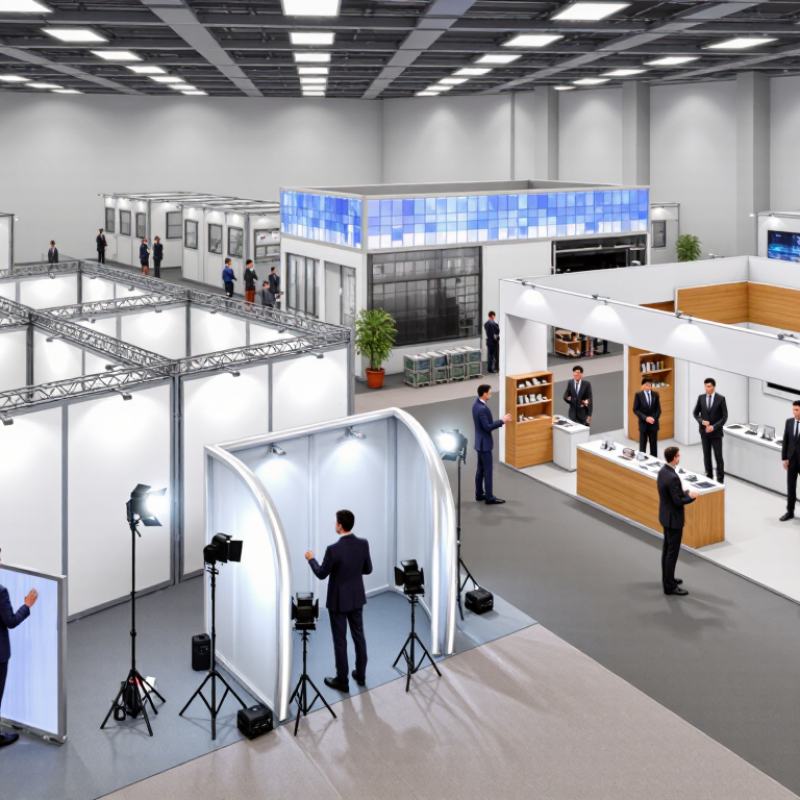
How Trade Show Booth Rental Alternatives Differ from Standard Rentals
A standard trade show rental usually provides a booth package for a set event period, with delivery, installation, and dismantling often included. Alternatives shift more responsibility, flexibility, or ownership to the buyer. The difference is practical. You may need to manage storage, shipping, or repairs yourself.
Options include buying a modular exhibit, choosing a portable tabletop display, using a pop-up backdrop, commissioning a custom-built booth, renting only selected components, combining owned and rented pieces, or purchasing a refurbished exhibit. A lightweight fabric wall can fit in a small vehicle, while modular frames can be rearranged for different floor plans. Partial rentals let buyers reuse counters or monitors they already own. Each approach changes what happens after the show, not just how the booth looks.
Compare the full cost across several events, including freight, labor, storage, and replacement graphics. A lower purchase price can feel less attractive when crates occupy a garage for months. Custom builds offer a precise fit, but changes may be costly. Refurbished pieces can reduce waste, though their dimensions and finishes may limit design choices. Hybrid plans sound efficient, but coordinating separate suppliers can be awkward. Check venue requirements and service details before deciding.
What Buyers Should Evaluate Before Choosing an Alternative
Before choosing a trade show booth rental alternative, confirm that it fits your actual floor space, not just a presentation sketch. Check the booth’s dimensions, ceiling height, power access, and venue rules. A display that looks spacious on screen may block an aisle or leave no room for product demonstrations. Details matter.
Compare the full cost, including design changes, shipping, installation labor, storage, and post-show pickup. Ask what happens if a crate arrives late or a panel is damaged. Get timelines in writing, and confirm who will be onsite during setup. A low initial quote can become expensive when services are added later.
Evaluate how easily the booth can adapt to different events. Modular walls, adjustable shelves, and replaceable graphics can help when floor plans change. Request photos of completed setups or a sample layout with lighting and cable routes shown. Ask for proof. References from buyers with similar booth sizes can reveal whether service is reliable under deadline pressure. One imperfect detail may remain: rental inventory can limit exact colors or custom features. Decide which compromises are acceptable before signing.
Custom-Built and Purchased Booths for Long-Term Use
For buyers planning repeated appearances, a purchased or custom-built booth can outperform rental when its frame, graphics, and storage suit several show cycles. UFI’s 33rd Global Exhibition Barometer reported surveyed exhibition companies’ 2023 revenues averaged 115% of 2019 levels. That signals a recovering show market, not guaranteed demand for every exhibitor. Plan around your own calendar.
Compare the full cost per use, not just the purchase price. Include design, fabrication, freight, setup labor, storage, repairs, and graphic updates. A compact modular structure may travel more easily between venues, while a custom build can create a precise product demonstration area. Measure twice. Check aisle dimensions, ceiling limits, and crate access before approving drawings. CEIR’s industry research tracks exhibitor performance and event outcomes; use comparable show results to estimate realistic booth traffic and lead value, rather than assuming every event will perform equally.
Ask fabricators for replacement-part details and a written inventory of reusable components. Keep spare connectors, labeled fasteners, and a photo guide in the storage case. Small issues matter. A booth that looks impressive in one venue may be awkward to ship or adapt elsewhere. That is easy to overlook. Revisit the cost model after each event, because storage fees and labor can quietly erase expected savings.
Modular, Portable, Pop-Up, and Tabletop Display Options
Trade show rental is not the only route to a convincing exhibit. Modular displays suit teams that reuse components across different booth sizes. Shelves, counters, and graphic panels can be rearranged for each floor plan. The trade-off is real: more flexibility can mean more parts to track and assemble. A modular kit is not automatically simple.
Portable displays work well when one person must move materials between venues. Lightweight frames and wheeled cases reduce lifting, though packed dimensions still matter on flights and in small cars. Pop-up backwalls create a broad, continuous graphic quickly. They can look less polished if the fabric wrinkles or the frame sits unevenly. Tabletop displays need little floor space, but samples, signage, and a focused conversation must do more work.
The market supports careful planning. UFI’s 2024 Global Exhibition Barometer reported that global exhibition industry turnover in 2023 reached about 98% of its 2019 level. That is a useful signal of renewed activity, not proof that every event will deliver the same return. Match the display to the venue, staffing, and shipping limits. Measure the packed case before ordering. Then check setup time with a real trial. Small details matter. One overlooked cable can spoil an otherwise tidy table.
Hybrid and DIY Booths for Flexible Exhibit Needs
Hybrid and DIY booths give buyers control over what they rent, build, and manage. A hybrid setup pairs rented structures, such as a frame or counter, with reusable graphics and owned display pieces. This can suit teams facing changing floor plans or limited storage. Measure the booth footprint, doorway access, and shipping crate before committing. Small mismatch, big headache.
DIY works best when the design stays simple. A lightweight backdrop, two shelves, a screen, and clear product labels can create a polished space without custom fabrication. Test the layout at full size, then time packing and setup. If one person cannot assemble it calmly, the plan may be too ambitious. Spare fasteners help. DIY is not always cheaper once labor, shipping, and repairs are included.
For flexibility, decide which parts must stay consistent and which can change. Keep core graphics and product demos, then rent furniture or extra lighting for larger events. Ask about delivery windows, electrical needs, and damaged components. Get answers in writing. Hybrid systems still need coordination, which is easy to underestimate. Reusable pieces may limit your ideal look, but they can make the next show easier.
