How to Choose Infant Diapers for Wholesale Buyers
Choosing Infant Diapers for wholesale requires more than comparing carton prices. Buyers must assess absorption, fit, skin contact materials, packaging, compliance, and supply reliability. A diaper that looks economical may create higher returns if it leaks during overnight use.
Grand View Research estimates that the global baby diapers market reached approximately USD 83.66 billion in 2023. Its report also projects continued growth through 2030, supported by urbanization, rising disposable income, and demand for convenient hygiene products. These figures show market potential, but they do not identify the best product for every region.
Local behavior matters.
Euromonitor International’s tissue and hygiene research highlights premiumization, product differentiation, and sustainability as important category trends. However, wholesale buyers should examine these claims carefully. “Natural” or “eco-friendly” wording does not automatically prove better performance. Request test reports, material specifications, absorption results, and clear product documentation before placing a large order.
Practical evaluation should include repeated use tests. Pour measured liquid onto samples, check rewetting after five minutes, and inspect the waistband for pressure marks. Compare newborn, medium, and toddler sizes separately. A supplier’s minimum order quantity, lead time, defect policy, and production consistency also deserve attention.
A low price can be misleading.
WHO guidance on quality management and relevant product standards supports a disciplined purchasing process, but no report replaces direct verification. Wholesale decisions should balance evidence, user comfort, shelf demand, and operational risk. This guide explains how to compare Infant Diapers with greater confidence while recognizing that one product rarely suits every market.
Define the Main Diaper Types and Their Wholesale Applications
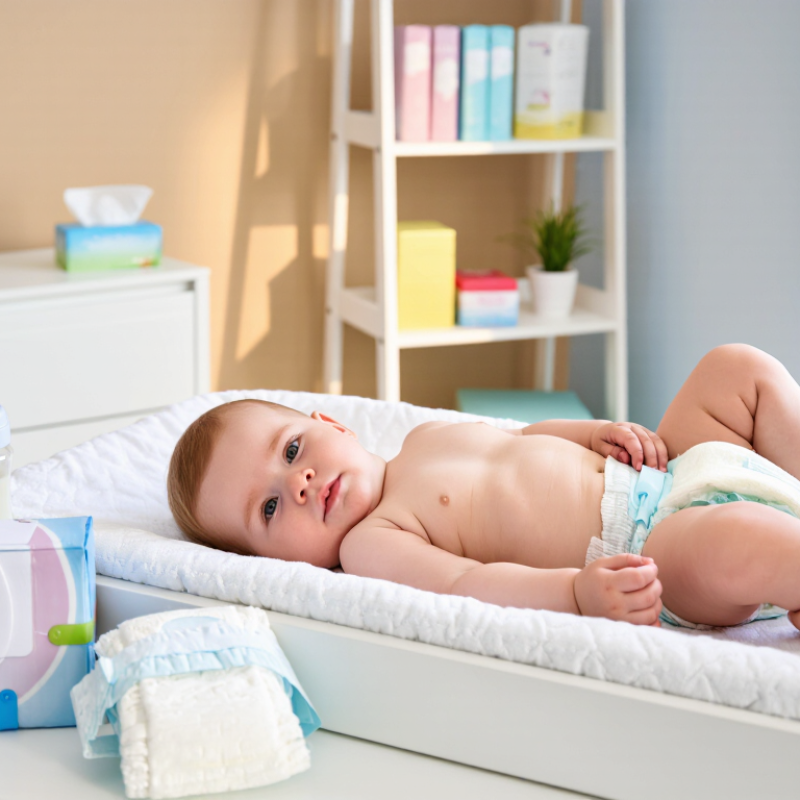
Wholesale diaper buying starts with product type, not carton price. The main groups are taped diapers, pull-ups, newborn diapers, and overnight diapers. Taped diapers use resealable tabs. They suit hospitals, maternity shops, and value-focused retailers. Pull-ups slide on like underwear and fit toddlers learning toilet routines. Newborn sizes need soft waist panels and an umbilical cutout. Overnight diapers usually require a thicker absorbent core.
According to Grand View Research’s 2024 report, the global baby diaper market was valued at approximately US$82 billion in 2023. Fortune Business Insights also forecasts continued market growth through 2032. These figures show strong demand, but they do not guarantee fast stock rotation. A buyer should match each type with local purchasing habits. For example, supermarkets often need mixed size cartons, while childcare distributors may prefer dependable taped diapers and smaller case quantities. Pull-ups can perform better in urban retail, where convenience matters more.
Tips: Request samples before approving a full shipment. Test leakage, tab strength, softness, and carton compression. Check absorbency after four hours, not only after a quick touch. Compare usable pieces per carton, not just the unit price. A cheaper diaper may create more returns. I have seen buyers overlook waist fit because the packaging looked professional. That was a costly mistake. Also review storage conditions, since heat and humidity can affect adhesive performance and packaging quality. Do not rely on one test wearer; children have different body shapes.
Assess Essential Features for Infant Safety, Comfort, and Absorbency
How to Choose Infant Diapers for Wholesale Buyers
Wholesale buyers should assess infant diapers through safety, comfort, and absorbency testing. Skin-contact materials should feel soft, smooth, and free from harsh odors. Review material specifications, supplier quality records, and independent laboratory reports before placing large orders. Documentation matters, but it should match the actual product batch.
Check the waistband, leg cuffs, fastening tabs, and inner lining by hand. They should stretch gently without leaving deep marks. Fit matters. A diaper that feels tight may cause redness, while loose cuffs can allow leaks. Choose multiple sizes and compare weight, shape, and movement comfort. Packaging should also protect diapers from moisture, dust, and crushing during transport.
Absorbency requires practical testing, not only impressive figures. Add measured liquid to samples, then check surface dryness, leakage, and rewetting pressure. Test during daytime movement and overnight storage. Small details matter. Still, laboratory results cannot represent every baby or sleeping position. Wholesale buyers should request samples from different production lots and repeat checks after storage. A supplier may pass one inspection but show inconsistent performance later. That gap deserves attention. Keep clear records of test dates, sample quantities, defects, and corrective actions. Reliable suppliers should answer specific questions and explain how they control raw materials, hygiene, sealing, and batch consistency.
Compare Materials, Sizes, Designs, and Performance Standards
Wholesale buyers should compare diaper materials before comparing carton prices. Fluff pulp absorbs quickly, while superabsorbent polymer holds liquid in the core. A soft, breathable nonwoven top sheet can reduce friction during movement. Plant-based fibers may support sustainability goals, but they need careful checks for strength and moisture control. Materials vary by supplier. Request composition data, odor checks, and samples from several production lots. Do not trust one perfect sample.
Size selection needs more than weight charts. Measure waist fit, leg openings, and core length against the intended age range. A diaper that gaps leaks, while an overly tight one leaves red pressure marks. Stock common sizes, but review regional growth patterns and retailer returns. Trial packs should include active babies, overnight use, and different body shapes. Fit is personal.
Design details affect handling and performance. Stretch tabs, wetness indicators, elastic barriers, and a stable absorbent core can improve daily use. Compare rewet after pressure, leakage during side sleeping, tear resistance, and fastening consistency. Ask suppliers for test methods, batch records, and conformity documents linked to applicable standards. Independent laboratory testing adds confidence, especially for large orders. Still, paperwork cannot replace a real wear trial. A small defect rate can become expensive across thousands of cartons. I would score softness, fit, absorbency, packaging, and complaints separately. That scoring may reveal an inconvenient weakness.
Evaluate Suppliers, Certifications, Pricing, and Minimum Order Quantities
Wholesale buyers should assess suppliers beyond catalog photos and low quotations. Grand View Research estimates the global baby diaper market reached about USD 83.5 billion in 2023, with a projected 5.7% CAGR from 2024 to 2030. This growth attracts many new factories, but capacity does not prove reliability. Request ISO 9001 records, recent factory-audit reports, and batch-level test results. For skin-contact materials, verify relevant chemical and safety testing. FSC certification may support responsibly sourced fluff pulp claims, but it does not replace product testing. Ask for certificate numbers, issuing bodies, expiry dates, and the exact factory name. Do not guess.
Pricing should be calculated as landed cost, not unit price alone. Add packaging, inland transport, ocean freight, duties, inspection, and payment fees. A quotation of USD 0.09 per diaper can become USD 0.13 after logistics and import costs. Request tiered pricing at several volumes. Then compare absorbency, material weight, and defect rates. The cheapest offer may contain less SAP or thinner backsheet material. That difference becomes visible in leakage complaints.
Minimum order quantity deserves equal attention. Confirm MOQ by size, absorbency level, packaging design, and printed carton. A supplier may quote 100,000 pieces, then require 20,000 pieces per size. Start with a controlled trial order when possible. Record delivery time, carton damage, odor, and sample consistency. I would also negotiate a smaller first production run, although this can raise the unit cost. That compromise is often safer than holding unsold inventory. (Grand View Research, Baby Diapers Market Size, Share & Trends Analysis Report, 2024.)
How to Choose Infant Diapers for Wholesale Buyers
Evaluate suppliers, certifications, pricing, and minimum order quantities before placing a wholesale order.
This 100-point screening model gives the greatest weight to product quality and compliance evidence, followed by landed pricing and minimum order quantity flexibility. Buyers should request current test reports, certification documents, product samples, full cost breakdowns, production lead times, and written MOQ terms from each supplier.
Plan Inventory, Packaging, Logistics, and Quality Control Requirements
Wholesale diaper planning starts with demand by size, absorbency, and pack format, not total carton volume. Use six to twelve months of sales history, then adjust for birth trends, promotions, and retailer commitments. The World Bank’s Logistics Performance Index 2023 reports an average 44-day journey for traded goods. That figure can expand during port congestion. I would hold safety stock by size, especially for newborn and overnight variants. But this is an assumption, not a law. Test it against supplier lead-time records every quarter.
Packaging decisions need both cube efficiency and hygiene protection. The OECD Global Plastics Outlook 2022 records 142 million tonnes of plastic packaging waste in 2019, about 40% of total plastic waste. Choose moisture-resistant inner bags, readable batch codes, and cartons that survive compression. Request pallet dimensions before purchase orders. A small change in case height can significantly alter container utilization. Do not accept “eco-friendly” claims without material specifications and test evidence. For quality control, approve a written sample, then inspect absorbency, leakage, fastening, dimensions, odor, and seal integrity. ISO 2859-1 can structure lot sampling, but AQL does not mean zero defective units. That distinction is easy to miss. Keep retain samples and photo records for every lot. Recheck fit after packaging changes; a softer pack can compress the core and change performance.
