What Is Dihydroberberine Powder Used For?
Dihydroberberine Powder is often discussed as a supplement ingredient related to berberine, but the two forms should not be treated as interchangeable without evidence. Its appeal is practical: people want clear explanations of its potential role in blood-sugar and metabolic health. Yet a product label cannot establish that a benefit is proven. The research base for dihydroberberine itself remains limited, and findings about berberine do not automatically apply to it.
A useful safety principle comes from the physician Paracelsus, whose warning is often translated as, “The dose makes the poison.” That is not a dihydroberberine-specific finding, but it is relevant when evaluating concentrated powders. A tiny scoop can be hard to measure consistently. Product strength and quality may also vary. This guide examines what Dihydroberberine Powder is used for, what current evidence can and cannot support, and what questions to ask before considering it. It is not a substitute for medical care or prescribed treatment. The evidence deserves a closer look.
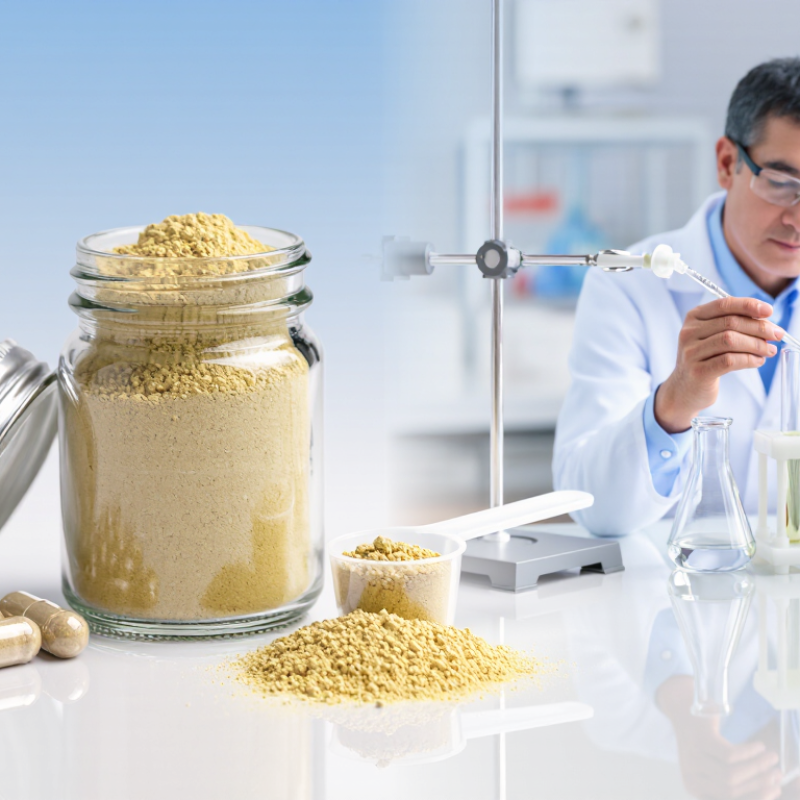
What Dihydroberberine Powder Is and How It Differs from Berberine
What Is Dihydroberberine Powder Used For?
What Dihydroberberine Powder Is and How It Differs from Berberine
Dihydroberberine, often shortened to DHB, is a chemically reduced form of berberine. The difference is small on paper: DHB has added hydrogen atoms. In the body, it may be converted back into berberine. Researchers are studying whether this pathway changes how much becomes available after oral use.
That question is still open. Early research suggests DHB may be absorbed differently, but human evidence is limited, and results from one product cannot be assumed to apply to every powder. A scoop’s appearance tells you little about its strength or purity. Look for clear ingredient amounts and independent testing, when available. Small details matter.
Berberine itself is a plant-derived alkaloid; DHB is not simply another name for it. Their effects and tolerability may differ, so claims that DHB is “stronger” or automatically gentler deserve caution. Supplements can also interact with medicines, including drugs that affect blood sugar. If you take medication or have a health condition, ask a qualified clinician before use. The evidence is developing, and the labels can sound more certain than the science.
How Dihydroberberine Is Thought to Work in the Body
Dihydroberberine is a reduced form of berberine, a plant-derived compound. After ingestion, it may be converted back into berberine, though how consistently this happens in people is not fully established. Some early research suggests dihydroberberine may be absorbed differently. Better absorption is not the same as proven better results.
Berberine is studied for effects on cellular energy pathways, including AMPK, which helps regulate how cells use energy. These pathways may influence glucose handling and the liver’s production of glucose. The body’s response can vary. Think of it as a signal network, not a simple on-off switch. Evidence specific to dihydroberberine remains limited, and proposed effects should not be treated as established treatment benefits. The picture is incomplete. That matters.
Blood glucose may be affected, so combining it with glucose-lowering medicines could require clinical guidance. Digestive discomfort is also possible. A clinician or pharmacist can review medications and health conditions before use. Research on long-term safety is still developing, and supplement labels do not replace independent testing.
Common Uses and Areas of Research
Dihydroberberine powder is studied as a precursor to berberine, a plant alkaloid involved in research on glucose and lipid metabolism. Researchers are interested in whether its altered form changes absorption. That possibility is not proof of better results. The powder may appear in dietary supplements, but it is not an established treatment for diabetes, weight loss, or high cholesterol.
Research on ordinary berberine offers context, not a direct answer. A 2022 systematic review in Frontiers in Pharmacology pooled 37 randomized trials involving 3,048 people with type 2 diabetes. It reported improvements in several metabolic measures, but the trials studied berberine, not necessarily dihydroberberine. Formulations and study quality varied. That gap matters.
Current dihydroberberine research is comparatively limited, so claims about superior absorption or dependable health effects need careful scrutiny. The National Center for Complementary and Integrative Health also notes that evidence for berberine remains limited for many proposed uses. For readers assessing a powder, check whether a study tested the same ingredient and dose; a capsule label alone tells little. Not settled yet. People taking glucose-lowering medicines should seek clinical advice, since combining supplements with treatment may affect blood sugar.
Forms, Dosage, and Factors Affecting Use
Dihydroberberine (DHB) is sold as a loose powder, capsules, or blended supplements. Powder allows flexible serving sizes, but it also makes accurate measurement essential: use a calibrated milligram scale, not a kitchen teaspoon. DHB is a related form of berberine, yet human evidence for DHB itself remains limited. A 2022 systematic review in Frontiers in Pharmacology assessed clinical trials of berberine in people with type 2 diabetes; those findings cannot establish an effective DHB dose. That distinction is easy to miss.
There is no well-established, clinically validated dosage for DHB powder. Follow the product’s measured serving instructions, and ask a healthcare professional before use, especially if you take glucose-lowering or blood-pressure medicines. The NIH’s National Center for Complementary and Integrative Health notes that berberine can affect blood sugar and may interact with medicines; this is a relevant caution, not proof that DHB behaves identically. Use may also depend on the powder’s purity, concentration, testing, and how consistently it is stored and measured. Look for independent identity and contaminant testing, and record the amount taken and any stomach upset. Evidence is still thin. A clinician can help weigh possible benefits against medication risks.
What Is Dihydroberberine Powder Used For? – Forms, Dosage, and Factors Affecting Use
| Topic | What Is Known | Factors to Consider |
| What it is | Dihydroberberine (DHB) is a reduced form of berberine. It is sold as a dietary supplement, including as powder and in capsules. | Product quality, ingredient identity, and serving size can differ between products. Check the full ingredient and Supplement Facts labels. |
| Commonly promoted use | DHB is marketed for metabolic health, including support for blood glucose and blood lipid levels. | Evidence specifically for DHB in people is limited. It should not be presented as a proven treatment or a substitute for prescribed care. |
| Powder form | Powder allows serving sizes to be measured directly and may be mixed into food or liquid according to the product label. | Use an accurate milligram scale if the label requires weighing. Household spoons do not reliably measure small supplement doses. |
| Capsule form | Capsules provide a pre-measured amount per capsule and may be more convenient for consistent serving sizes. | Check the amount of DHB per capsule; capsule weight is not necessarily the same as the amount of active ingredient. |
| Dosage | There is no universally established or officially recommended dose of DHB. Follow the specific product label and seek advice from a qualified healthcare professional. | Do not assume that a dose of DHB is equivalent to the same dose of berberine. Research and product formulations are not interchangeable. |
| Timing and consistency | Directions for timing and frequency vary by product. There is not enough evidence to establish one best schedule for all users. | Follow the label rather than increasing frequency or dose based on general claims. Taking a supplement consistently does not establish that it is effective. |
| Factors affecting use | Relevant factors include the product’s actual DHB content, formulation, serving size, individual health status, and other medicines or supplements. | Discuss use with a healthcare professional, especially if you take medication, have a medical condition, are pregnant or breastfeeding, or are planning surgery. |
| Safety and interactions | Supplements can cause side effects and may interact with medicines. The safety profile of DHB is not fully established. | Ask a healthcare professional or pharmacist to review possible interactions, particularly with medicines that affect blood glucose or blood pressure. |
Important: Dihydroberberine is a dietary supplement, not a substitute for medical diagnosis or treatment. Consult a healthcare professional before use.
Safety, Side Effects, and Potential Interactions
Dihydroberberine (DHB) is marketed for metabolic health, but reliable human safety data remain limited. Much of the available guidance concerns berberine, a related compound, so it cannot be assumed to apply exactly to DHB. That distinction matters. In a small human study, 17 volunteers took berberine three times daily for two weeks; researchers observed changes in CYP2D6, CYP2C9, and CYP3A4 enzyme activity (Guo et al., European Journal of Clinical Pharmacology, 2012). These enzymes affect how many medicines are processed. The study did not test DHB, and its small size limits conclusions.
Reported berberine side effects include nausea, constipation, diarrhea, and abdominal discomfort. A practical warning sign might be persistent stomach upset after starting a supplement, though symptoms alone cannot identify the cause. The US National Center for Complementary and Integrative Health warns that berberine may interact with medicines, including cyclosporine. DHB users taking prescription drugs, especially medicines that affect blood sugar, should ask a clinician or pharmacist to review potential interactions. Evidence for specific DHB interactions is still incomplete. Avoid berberine products during pregnancy or breastfeeding; the same precaution is sensible for DHB until stronger safety evidence exists. Safety claims should stay cautious.
How to read this chart: This is an ordinal evidence scale, not a measure of effectiveness or risk: 0 = none or not established; 1 = limited evidence; 2 = well established. Dihydroberberine has no FDA-approved medical indication in the United States, and human evidence specific to it remains limited.
Safety note: Possible side effects and drug interactions are not well characterized for dihydroberberine. Berberine-related evidence suggests potential effects on blood sugar and on drug-metabolizing enzymes or transporters, but it is unclear whether these apply equally to dihydroberberine. Ask a healthcare professional before combining it with medicines, especially diabetes medicines, or using it during pregnancy or breastfeeding.
