Choosing a Toiletry Organizer Bag in 2026 is less about finding the most features and more about matching a bag to your routine. A weekend traveler may need only a compact pouch for a toothbrush, cleanser, and a few small bottles. Someone packing for a longer trip may value separate sections for skincare, medication, and damp items. The right choice should make everyday packing easier, not add another puzzle to solve.
Start with the details you can check: the bag’s dimensions, material, closures, and interior layout. Water-resistant fabric can help protect clothing from minor spills, but it does not make a bag leakproof. Look for smooth zippers, seams that feel secure, and compartments you can actually reach when the bag is full. A hanging hook can be useful in a small bathroom, though it may add bulk. Small details matter.
More pockets are not always better. Too many can make familiar products harder to find, especially in dim hotel lighting. Think about what you carry, how you pack it, and whether you prefer bottles upright or laid flat. If possible, compare the listed measurements with a pouch you already own. That simple check can prevent an annoying mismatch. This guide explores practical features, common trade-offs, and care tips, while keeping one point in view: a useful organizer fits real habits, not just a product photo.
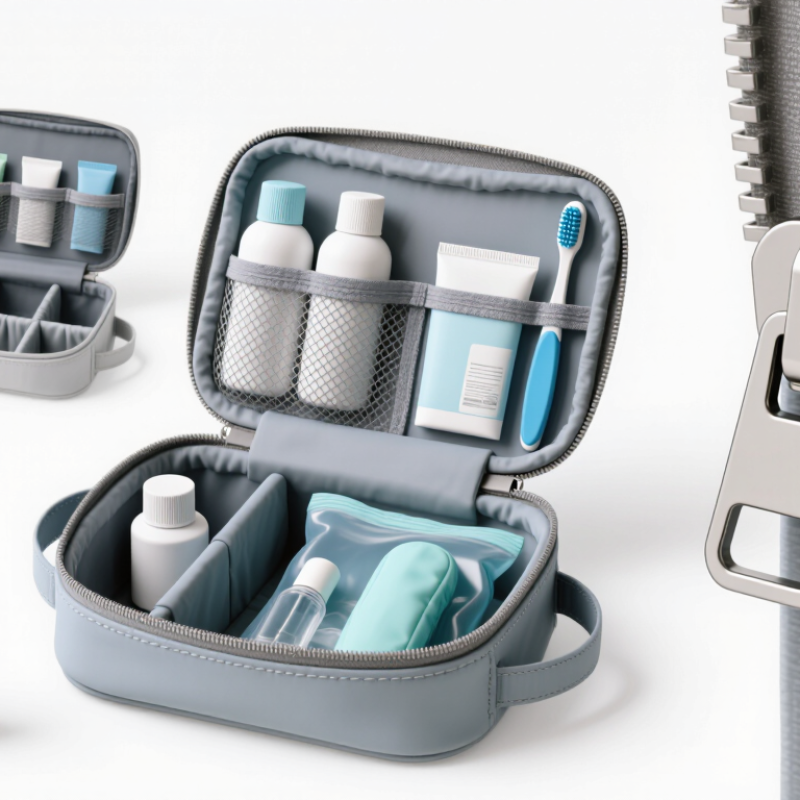
A toiletry organizer should match what you actually carry, not an idealized packing list. For a weekend away, a compact pouch may hold a toothbrush, face wash, medication, and a few skin-care items. Longer trips often call for separate spaces for bottles, grooming tools, and everyday essentials. Notice what you reach for each morning. If you regularly dig beneath loose items, compartments or a wide opening may help.
Your travel habits matter just as much. Do you pack in a carry-on, share a bathroom, or move between hotels? A hanging hook can keep supplies off a damp counter, while a flat pouch may fit better in a crowded suitcase. Check the organizer’s measurements against your bag, and consider whether its lining wipes clean after a small leak. It happens.
Tips: Before buying, lay your usual toiletries on a towel and group them by use. Measure the tallest bottle and note any items that need to stay upright. Choose only the features you will use; extra pockets can add bulk without solving a real problem.
Be honest about your routines. A large organizer can feel reassuring at home, then take up too much space on a short trip. I have found that packing one ordinary travel load is more revealing than judging a bag while it is empty. The right choice may be less tidy than expected, but easier to use.
A toiletry organizer’s shape should match where you use it. A hanging bag suits a shared bathroom with little counter space; its hook keeps bottles off a wet sink. A box-shaped case stands open on a hotel shelf and protects taller containers, but it can take up room in a packed suitcase. A flat pouch slips into tight gaps and works for a toothbrush, comb, and a few small tubes. Less structure means items may pile together. That matters.
Size is easier to judge by packing your usual items first. Measure the tallest bottle, then allow a little extra height so the zipper does not press against its cap. For a short overnight trip, a compact case may hold a toothbrush, face wash, and deodorant. Longer trips often need room for full-size products, though a larger bag can tempt you to overpack. Measure first.
Look at the layout, not just the outside dimensions. Elastic loops keep narrow bottles upright, while mesh pockets make small items easier to spot. A separate compartment can isolate a damp washcloth, but only if it dries between uses. A wipe-clean lining helps after a leak; it does not prevent one. Too many pockets can slow packing, and a neat-looking layout may still feel awkward with your own routine. One compromise is a simple main compartment with a few useful dividers.
Choosing a toiletry organizer in 2026 starts with materials that suit your routine. A tightly woven nylon or polyester shell is light and easy to wipe, while a coated fabric can better handle splashes. Check the seams and lining, not just the outer surface. A glossy finish may look protective but can still let water seep through stitching. Small details matter.
Closures affect both access and spill control. A zipper should glide smoothly around a packed bag without snagging on fabric. Wide openings make it easier to find a small tube, though they can expose contents if the bag tips over. Water-resistant materials help with damp counters and minor splashes; they are not necessarily waterproof. For extra reassurance, test the bag with a few drops of water at home, then inspect its seams. I used to assume a wipe-clean interior meant the whole bag was protected. It did not.
Tips: Look for a washable lining and sturdy zipper pulls. Pack liquids in sealed containers, and keep them upright when possible. Check the corners after use; that is where residue can collect. If you often travel with wet items, choose a separate compartment with a water-resistant lining. Don’t rely on it to contain every leak.
Choosing a toiletry organizer in 2026 means checking how it travels, cleans, and holds up—not just how many pockets it has. SITA’s 2024 Baggage IT Insights report recorded 6.9 mishandled bags per 1,000 passengers in 2023. That figure concerns airline baggage, not toiletry bags, but it’s a useful reminder: travel gear gets squeezed, shifted, and handled roughly. Pick a compact shape that fits your usual carry-on, with a secure handle and zippers that open smoothly when the bag is full. Small details matter.
For easier cleaning, look for a light-colored, water-resistant lining and seams you can reach with a cloth. Removable dividers help when a bottle leaks. Still, “wipe-clean” does not mean stain-proof; I wouldn’t trust that label alone. For durability, inspect zipper teeth, stress points, and stitching around handles. A soft, flexible shell may pack neatly but sag under heavy bottles. A rigid frame protects contents, though it can waste space. There’s no perfect trade-off.
Tips: Pack your usual toiletries before buying. Check whether bottles sit upright, wipe a small lining area with a damp cloth, and tug gently on the handle seams. Notice what feels flimsy. That first impression can be wrong, but it’s worth testing.
Choose a toiletry organizer by where it will be used, not by its pocket count. For a weekend trip, a compact pouch with a wide opening may be enough. Frequent travelers may benefit from a hanging hook and separate compartments for damp items. Check the packed dimensions against your carry-on or bathroom shelf. Water-resistant fabric can help with small spills, but it is not necessarily waterproof. Sturdy seams and a zipper that moves smoothly matter more than flashy extras.
Tips: Set a budget before comparing features. Prioritize easy cleaning, useful compartments, and a size that fits your routine. Leave room for toiletries you actually carry.
A lower-cost bag can work well if it holds its shape and dries fully between uses. At a higher price, look for construction details you will use often, such as wipe-clean lining or a reinforced handle. Pocket count can look persuasive; question whether every section earns its space. That matters. It is also easy to buy more capacity than you need, then let the bag become bulky. Think about your routine honestly, even if it changes from trip to trip.
| Organizer Type | Typical Price (USD) | Approx. Capacity | Useful Features | Best For | Trade-Offs | What to Check Before Buying |
|---|---|---|---|---|---|---|
| Basic zip pouch | $5–$15 | 1–3 L | Single compartment; lightweight fabric; simple zipper closure | Short trips, gym bags, or carrying a small daily kit | Small items can collect at the bottom; usually has limited organization | Look for a wide opening, sturdy zipper, and a lining that can be wiped clean. |
| Structured Dopp kit | $12–$35 | 2–5 L | Box-shaped base; one or more internal pockets; often has a carry handle | Weekend trips and everyday grooming items | Uses more luggage space than a flat pouch and may not stand upright when empty | Check the packed dimensions, pocket layout, and whether the base stays stable on a counter. |
| Hanging toiletry bag | $18–$50 | 4–9 L | Hook for hanging; multiple zip pockets; opens to display contents | Shared bathrooms, cruises, and trips with limited counter space | Can be bulky when packed; the hook needs a suitable place to hang | Check the hook strength, open dimensions, pocket closures, and total packed weight. |
| Clear liquids pouch | $5–$18 | About 0.9 L (1 US quart) | Transparent sides; quick visual access; often made from wipe-clean plastic | Keeping travel-size liquids together for airport screening | Capacity is limited; a clear pouch does not guarantee compliance with every airport or security rule | Confirm the dimensions and current rules for your route. In the U.S., the TSA generally describes the liquids bag as one quart-sized bag, with containers limited to 3.4 oz (100 mL). |
| Water-resistant travel organizer | $20–$60 | 3–7 L | Coated or tightly woven fabric; wipe-clean lining; separate wet/dry pockets on some models | Frequent travel or packing near damp towels and toiletries | Water-resistant does not mean waterproof; coatings and seams can wear over time | Check care instructions, seam construction, and whether wet items are separated from dry contents. |
| Compact flat organizer | $8–$25 | 0.5–2 L | Slim profile; lightweight construction; may include elastic loops or a few small pockets | Carry-on packing, minimalist kits, or keeping essentials in a day bag | Less capacity for full-size bottles; soft sides provide little protection against crushing | Compare the internal dimensions with your tallest bottle and check that closures secure small items. |
| Large family or shared-use organizer | $25–$75 | 8–15 L | Several compartments; room for multiple kits; may include a hanging hook or grab handle | Family holidays, road trips, or keeping several people’s toiletries together | Can become heavy and take up substantial luggage space when fully packed | Check divider layout, handle stitching, packed dimensions, and whether it can be separated into smaller sections. |
Price note: Ranges are approximate general-market estimates in U.S. dollars and vary with size, materials, construction, and retailer. Choose capacity based on what you actually pack, and prioritize easy cleaning and secure closures for regular travel.