Choosing a Light Down Sleeping Bag from a Chinese manufacturer involves more than comparing fill-power figures. Buyers also need to examine construction, materials, and quality-control practices. A bag that looks excellent in a catalog may feel different after a cold night outdoors. Small details matter.
Outdoor educator Andrew Skurka is known for practical gear guidance. A paraphrased principle relevant to this decision is: “Match the bag to the trip, not just the scale.” That distinction matters when comparing lightweight models. Check the stated temperature rating, down type, fill weight, shell fabric, and baffle design. Ask how measurements are tested and whether sample specifications match production units. Request clear product documentation. Then compare stitching, zipper operation, hood adjustment, and packed size—not just headline claims.
This guide introduces China-based manufacturers for buyers seeking a Light Down Sleeping Bag, while keeping the comparison grounded in verifiable details. A supplier’s response time and willingness to explain testing can be as useful as a polished product sheet. Ask about customization, sample evaluation, order consistency, and after-sales support. Be cautious with vague performance claims. Even careful comparisons leave questions. Buyers should confirm important specifications directly and assess samples under realistic conditions before making a larger order. The lightest option may not be the most dependable choice for every trip. That is easy to overlook.
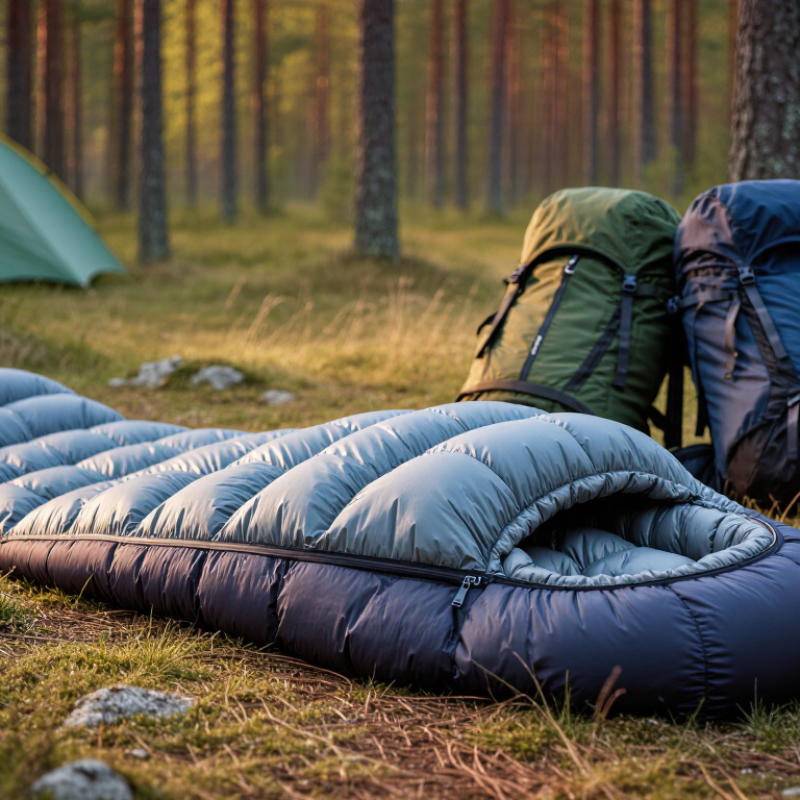
A lightweight down sleeping bag is not defined by one weight cutoff. Its real value comes from warmth per packed gram, a balance between down quality, fill weight, shell fabric, and construction. Fill power measures loft: the International Down and Feather Bureau’s testing regulations report it in cubic inches per ounce. Commercial specifications commonly span about 600 to 900, but higher fill power alone does not guarantee a warmer bag. The quantity of down matters, too.
Temperature claims need context. ISO 23537-1:2022 sets standardized thermal testing for adult sleeping bags and distinguishes comfort from lower-limit ratings. A bag rated for a 0°C comfort temperature is not automatically comfortable for every sleeper at 0°C; clothing, sleeping pad, dampness, and personal metabolism all affect warmth. Check the test method and rating, not just a bold number on a product sheet.
Look at the details. A narrow baffle can let down shift, leaving a cold strip near your shoulder. A heavier draft collar may add grams but reduce heat loss around the neck. Ask for total bag weight, down fill weight, fill-power test basis, and temperature-rating documentation. One caveat: “lightweight” is often a marketing label, not a universal technical category, so comparisons can be imperfect.
Designing a light down sleeping bag starts with its intended temperature range, packed size, and expected use. Manufacturers translate those needs into a pattern, then place insulation where heat loss is most likely. A shaped hood, insulated draft collar, and narrow baffles can reduce cold spots without adding unnecessary bulk. Small details matter. The zipper guard, for example, helps prevent fabric snags and drafts.
Production usually begins with fabric inspection and cutting. Lightweight shell fabrics need consistent seams, since tiny needle holes can affect durability. Workers construct baffles between the inner and outer layers, then fill them with measured down. The fill amount and distribution are checked against the design, not judged by appearance alone. Down quality, shell fabric, and baffle height all influence warmth and packed volume. A lighter bag is not automatically a warmer one.
Quality checks may include weighing the finished bag, examining seams, testing zipper movement, and checking loft after compression. Methods vary by factory, so buyers should ask how results are recorded and whether production samples match approved specifications. A tidy sample can hide uneven filling in a larger run. That is easy to overlook. Even careful processes have limits, and real-world comfort also depends on the sleeper, ground insulation, and conditions.
Temperature ratings on sleeping bags may be shown in Celsius or Fahrenheit. This chart shows the exact conversion between the two scales; it does not represent a particular bag’s tested performance or manufacturer specifications.
For a light down sleeping bag, fill power matters, but it is not a warmth guarantee. The International Down and Feather Bureau’s testing rules report fill power in cubic inches per ounce under standardized conditions. A 700 in³/oz result describes loft, not the finished bag’s temperature rating. Small detail, big difference. Ask suppliers for test records and confirmation that the sample matches the production fill.
Down clusters with higher fill power can provide more loft for less weight, but shell fabric, baffle design, and fit also affect heat retention. A thin, tightly woven shell helps reduce drafts, while well-shaped baffles limit cold spots. Damp down can lose loft, so check the bag’s care instructions and consider how easily it can dry on a real trip. Numbers alone miss that.
For temperature comparisons, EN ISO 23537-1:2022 provides a laboratory framework for rating sleeping bags, including comfort and limit temperatures. Ask whether the stated rating comes from testing the complete bag, not a fabric or fill sample. I would also request the fill-weight specification and batch-level quality checks. That feels less glamorous than a high loft figure, but it is more useful. I still would not treat any lab rating as a promise for every sleeper or campsite.
When comparing China-based light down sleeping bag manufacturers, buyers should look beyond catalog photos. Ask how each factory checks down fill weight, fabric thickness, zipper function, and seam quality. Request a production sample, not only a showroom piece. Small details matter: loose threads near the foot box or a zipper that catches on the lining can affect comfort outdoors.
Check the test documents carefully. Confirm what the reported fill power measures, which test method was used, and whether the report applies to the proposed material. Ask for the down-to-feather composition and sourcing records, then compare them with the product specification. A clear temperature rating should explain its testing basis; a single number without context is hard to assess. Keep it specific.
A useful factory review includes recent quality-control records and a video or live view of packing and inspection. Ask how staff measure fill distribution across chambers and handle units that fail checks. Compare several samples for weight, dimensions, loft, and construction. One excellent sample is not proof of consistent production. I have seen buyers focus on price and overlook repeatability; that is an easy mistake. Request written tolerances and confirm that the bulk order will use the approved materials and construction. If answers stay vague, pause and ask for evidence.
Buyers should define the intended temperature range, user height, and packed size before requesting quotes. The Outdoor Industry Association’s 2024 Outdoor Participation Trends Report says 175.8 million Americans took part in outdoor recreation in 2023. That is a useful demand signal, not a forecast for sleeping bags. For a custom light down bag, specify fill weight and fill power separately; they affect warmth and total weight in different ways. Request the supplier’s test method and recent fill-power results. Ask whether finished bags are tested to ISO 23537, which covers sleeping-bag performance and labeling.
Customization can include shell fabric, zipper length, draft tube, hood shape, and left- or right-side opening. Each choice changes cost, weight, or comfort. A 10-denier shell may save grams, but it can feel less robust in rough use. Confirm sample measurements, stitching details, minimum order quantity, and production lead time in writing. Ask for down-source documentation and batch-level quality records. Small differences between sample and bulk production happen; plan a pre-shipment inspection rather than assuming every unit matches.
Tips: Request one prototype in the intended size, then test it with the actual sleeping pad and clothing layers. Check zipper snagging, loft recovery, and packed volume after repeated compression. Keep the specification sheet simple and measurable.